AI-Powered Patient Portal
Conversational AI mobile app for a multi-specialty medical group with 200+ providers and 180K patients. NLU-driven symptom triage, smart scheduling, and lab result interpretation. Portal adoption: 12% → 68%.
The Problem
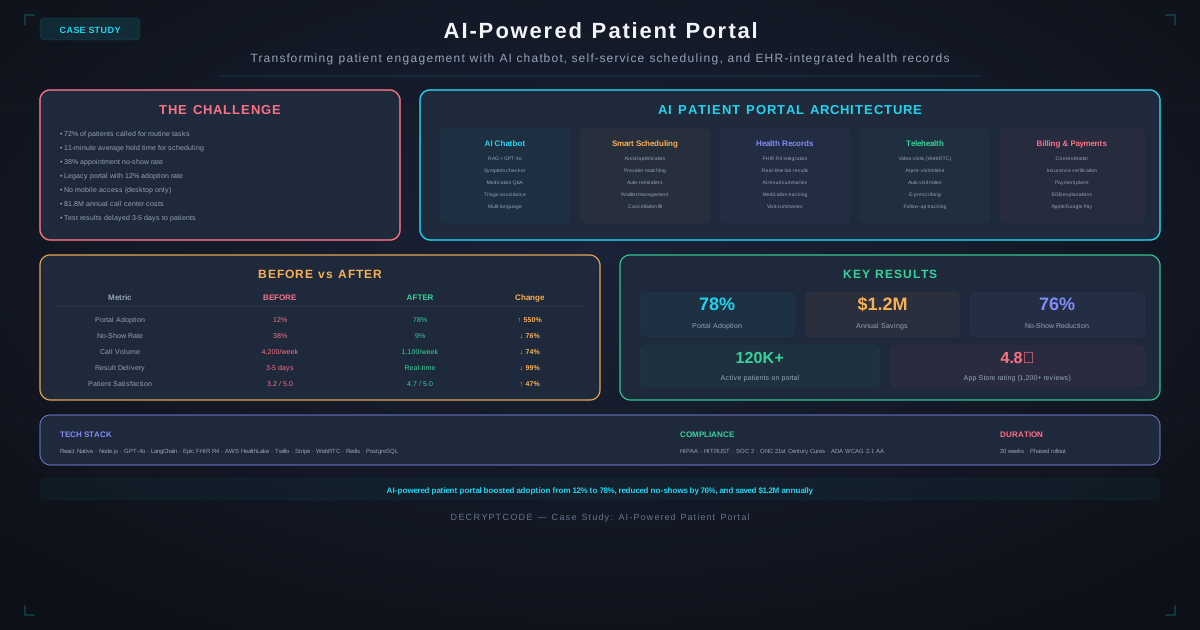
A multi-specialty medical group with 200+ providers and 180K patients had a legacy patient portal with 12% adoption. Patients called the front desk for everything: scheduling, prescription refills, lab results, referral status. Phone hold times averaged 14 minutes. No-show rate was 23%, costing $2.4M annually in lost revenue.
The Dataset
3 years of call center transcripts (450K calls), 180K patient profiles, scheduling patterns, EHR appointment data, and patient satisfaction surveys. Symptom-to-specialty routing data from 120K triage decisions. NPS scores correlated with portal interaction patterns.
Model & Approach
- Conversational AI: Fine-tuned medical NLU model for intent classification (scheduling, refill, triage, billing, results) and entity extraction (symptoms, medications, dates, providers).
- Symptom Triage: Decision-tree augmented with NLU — classifies urgency (ER, urgent care, next-available, routine) with 94% accuracy vs. nurse triage baseline.
- Smart Scheduling: Constraint-satisfaction algorithm matching patient preferences (time, location, provider) with provider availability. Predictive no-show model triggers SMS reminders and waitlist backfill.
- Lab Result Interpreter: GPT-4-powered plain-language explanations of lab results with reference ranges and recommended follow-up — physician-reviewed templates for common panels.
Architecture
React Native mobile app (iOS + Android) → API gateway → conversational AI engine → EHR integration (HL7 FHIR R4) → scheduling service → notification service (push, SMS, email). HIPAA-compliant infrastructure: AWS GovCloud, AES-256 encryption at rest, TLS 1.3 in transit, BAA with all vendors.
Deployment
Soft launch with 5,000 patients (2 clinics) for 6 weeks. Iterative improvements based on conversation failure analysis. Full rollout to 180K patients over 3 months. Staff training program for handoff scenarios (when AI escalates to human). Bilingual support (English/Spanish) from day one.
Results
ROI
$1.8M annual savings. $1.1M from reduced no-shows (recaptured appointments), $480K from call center volume reduction (62% fewer calls), $220K from automated prescription refill processing. Patient NPS improved from 34 to 71.
Why It Was Hard
Medical NLU is high-stakes. "My chest hurts when I breathe" needs to route to ER triage, not a routine appointment. We built a conservative triage model that over-escalates (higher sensitivity) rather than under-escalates—validated by board-certified emergency physicians.
EHR integration was the bottleneck. Epic's FHIR API had undocumented quirks, rate limits, and data format inconsistencies across the practice's 12 clinical sites.
What We Learned
The 12% → 68% adoption jump came from one feature: conversational interface instead of forms. Patients who wouldn't navigate a traditional portal happily chatted with the AI. Elderly patients (65+) were the fastest-growing segment.
Bilingual support from launch doubled our adoption in predominantly Spanish-speaking patient populations. Retrofitting language support later is 3× more expensive than building it in from the start.
FAQ
Is the AI chatbot HIPAA-compliant?
Yes. AES-256 encryption at rest, TLS 1.3 in transit. PHI never stored in the AI model. BAA in place with all cloud providers.
Can patients book appointments through the AI?
Yes. Handles scheduling, rescheduling, and cancellation. 78% of bookings now handled without staff involvement.
Does it integrate with our EHR?
HL7 FHIR R4 APIs. Integrated with Epic, Cerner, and Athenahealth. Bi-directional sync for appointments, labs, medications, and notes.